Beginner's Guide to Starting a Channel

Beginner's Guide to Starting a Channel

Starting a YouTube channel is a series of decisions made before any video gets filmed. Most of these decisions are hard to undo later, so it's worth slowing down here rather than rushing to record.

TubeSpanner Logo
Ike

Heading
Be Clear on Why You're Starting

Body

Channels built for fame, business, and hobby all require different approaches, so it's worth being honest about which one applies to you before anything else.

Are you building a personal brand? If so, consistency and personality matter more than polish early on.

Are you trying to grow a business? Then the channel should support a product or service and relevance to that offer matters more than raw view count.

Are you doing it as a hobby? Sustainability matters more than growth speed.

None of these is the "right" reason, but the reason can change what "success" looks like. And it'll change what you should measure in terms of growth.

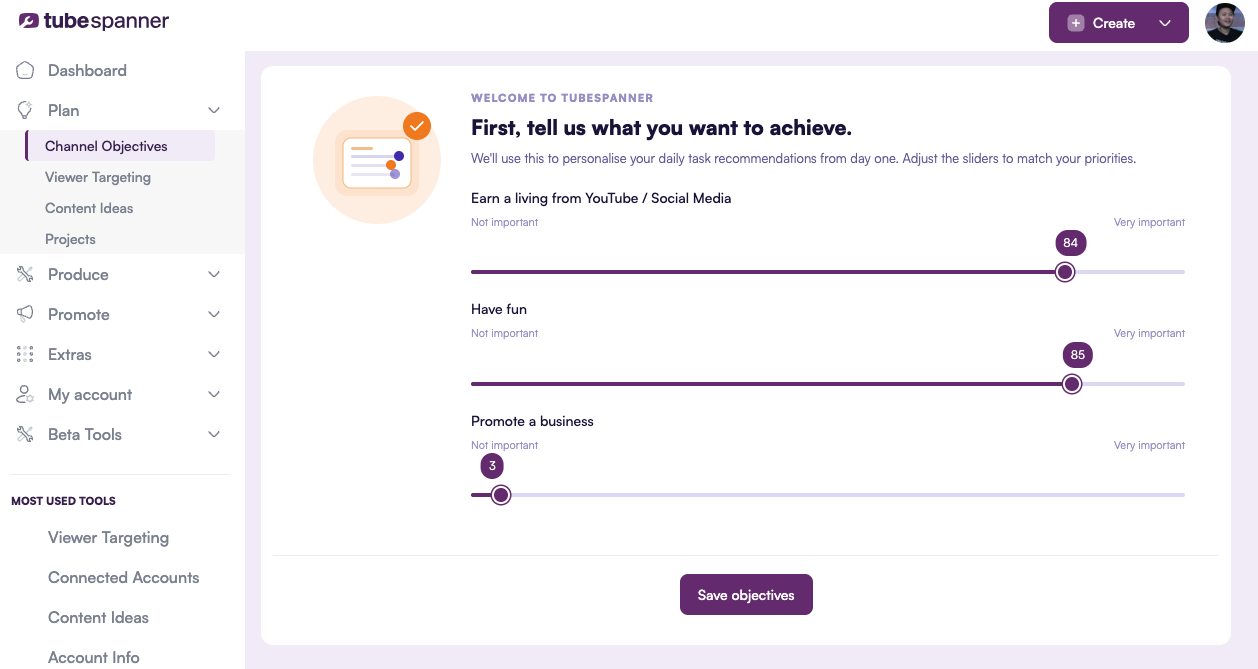
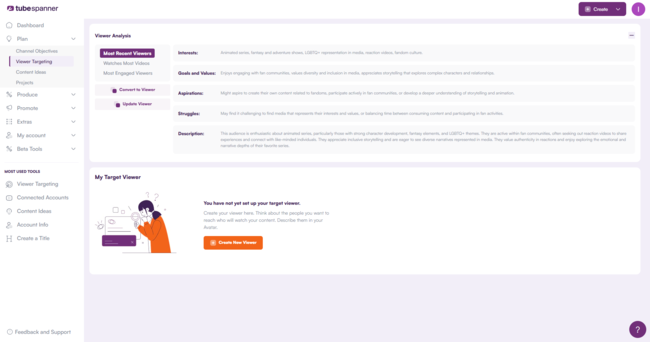
With TubeSpanner, you can scale the importance of the three in Channel Objectives to personalize your daily task recommendations so that you have a clear to-do list.

Heading
Choose a Niche You Can Sustain

Body

A niche is the topic or theme a channel is known for. It should be specific enough that YouTube's system and viewers both understand what your channel is about, and broad enough to support videos for months or years.

We recommend you answer the following questions before committing.

Is there an audience already searching for this topic? Search up the topic on YouTube and take a look at existing channels in the space. What are their subscriber counts, upload frequency, and view counts on videos within the last 90 days?

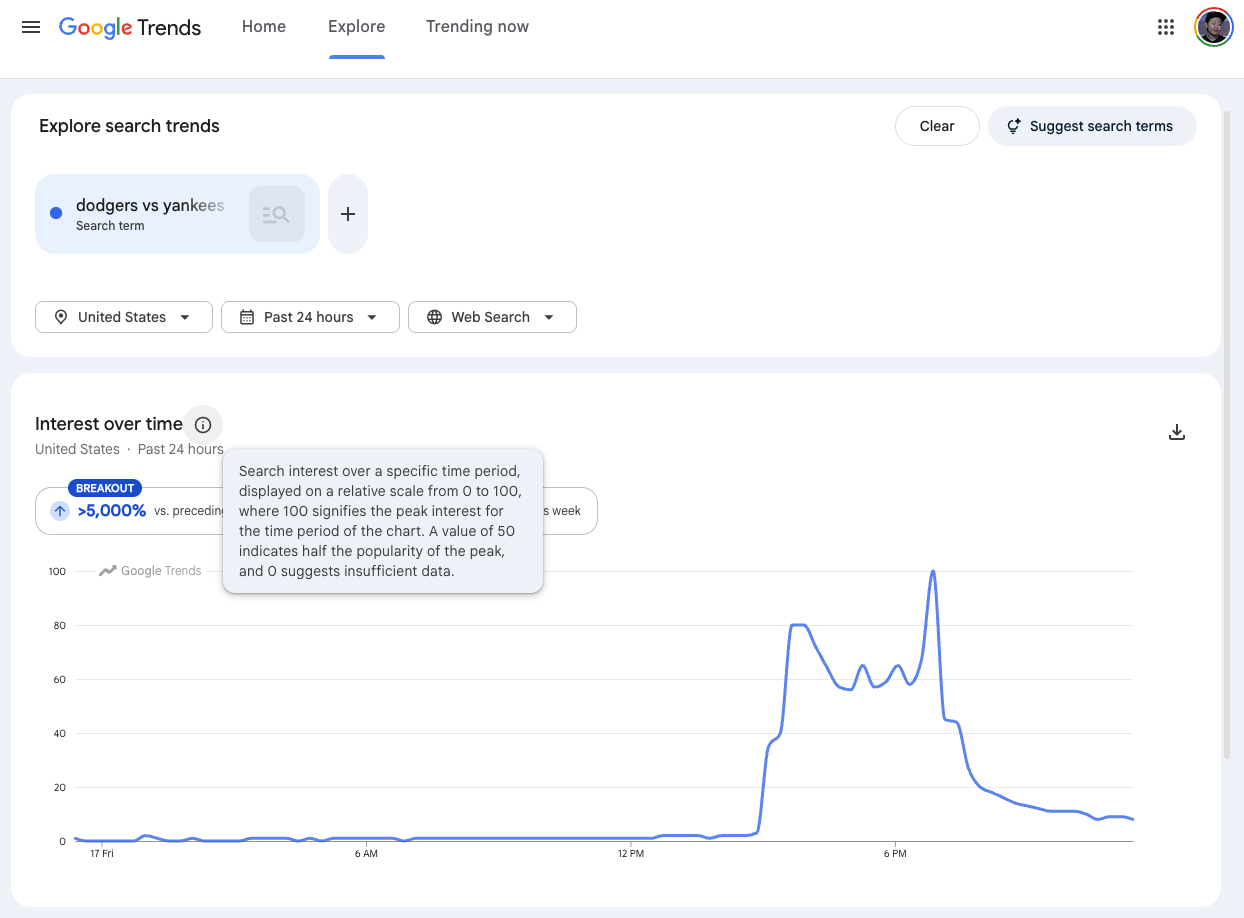
Head over to Google Trends and check if the topic has interest over time. Some topics might be seasonal, while others maintain a constant interest. 

Can you make 50+ videos on this without running out of ideas? If you struggle with even having more than five ideas for a topic, then that topic might not be for you.

Is this something you can keep making for more than a year? Having a constant flow of ideas is great, but can you keep up? Burnout on a niche is a common reason channels stop.

If any of your answer to these three questions is no, then you should take the time to reconsider.

"What if I have multiple topics I want to talk about?"

Then you should create multiple channels. Don't jam every single topic into one channel because once you figure out what you truly want to do, you'll come to regret this decision. A viewer who came to watch your football content might not be interested in your mathematic content, and vice versa. You'd end up with a split audience, and that can stagger your growth.

Tip

Image
Tip

Title
Struggling with video ideas?

Body

TubeSpanner can generate video ideas based on your current or target viewer, so you'll always get ideas according to your niche and not generic ideas.

Heading
Decide Your Channel Identity

Body

Some of the first things a viewer will see before they ever click on your video is your channel name, whether your face is on the thumbnail or video preview, and your tone and personality based on your packaging.

Your channel name should be memorable and ideally searchable. Avoid names that are too close to existing channels or brand.

Whether you're on camera or not, both can work. It's only affects the format, editing style, and how personal the content feels.

Your tone and personality can be casual, comedic, educational, etc., but it should stay consistent across videos so returning viewers know what to expect.

There's no single correct identity, and your identity can change overtime as you grow and become more comfortable. The goal is picking something you can maintain video after video without it feeling like a performance.

Heading
Set Up the Channel Itself

Body

Now that you know the reason why you're starting the channel, what niche you're doing, and your identity, it's time to set up your channel.

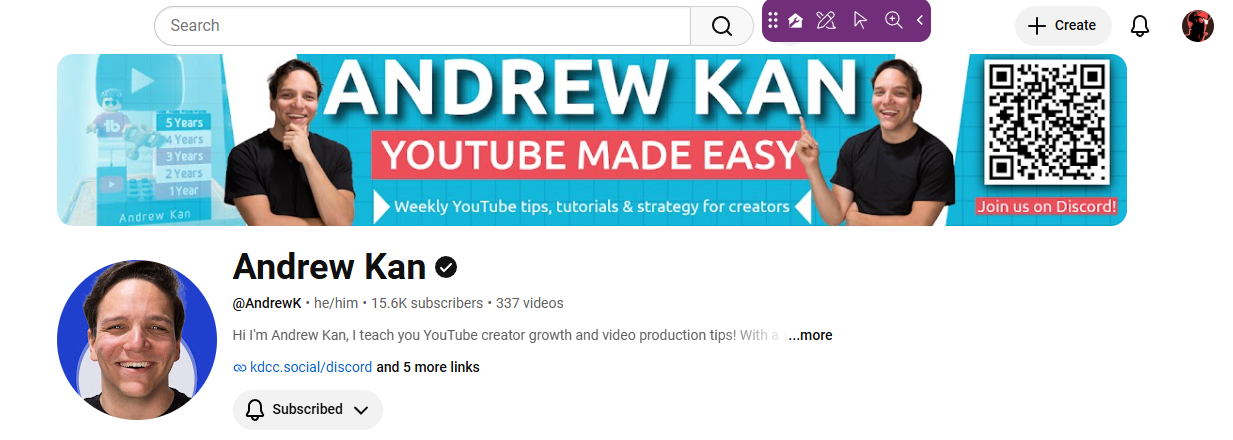
Head into YouTube Studio and click on the Customization tab. Here, you'll be able to customize your banner, profile picture, channel name, handle, pronouns, channel description, links, contact info, and video watermark.
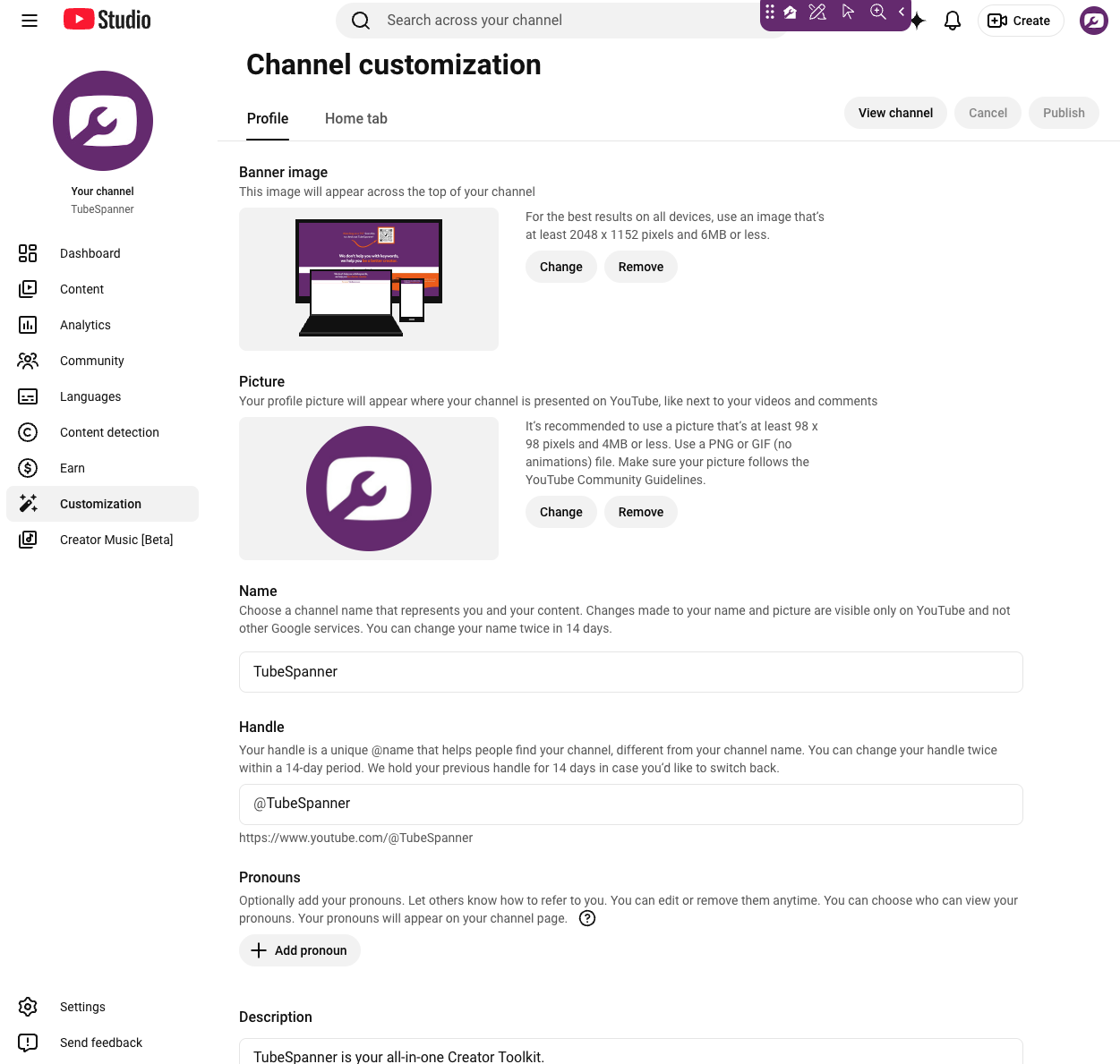
1. Your channel banner should convey the following:

  • Your channel name
  • What your channel's about
  • How often you upload / Your upload schedule

2. Your profile picture should complement your banner, but it should also stand out in search and in comments.

3. We've discussed how your channel name should be in step 3 (memorable and searchable).

4. Your handle should be the same or similar to your channel name.

5. Pronouns are optional, but feel free to add in what you want people to call you as.

6. Your channel description is where you can explain to both YouTube and viewers what your channel is about. However, the first two lines of your channel description should mention your channel name and niche. A lot of creators don't know about this, and would type is whatever comes to mind.
7. You can add more than 10 links, but only one can be clicked directly from your channel while the others will be put in a pop-up box. So your first link is very important, whether that'll lead to your membership, a subscribe button, or a link-in-bio.

8. Your contact info should NOT be the same email you use for your YouTube channel. This is an easy way for hackers/scammers to gain access to your account. Instead, create a separate email.

9. Your video watermark can be your profile picture if you don't have a custom watermark yet. We recommend you set it to show throughout the entire video.

Heading
Set a Cadence You Can Actually Keep

Body

Now that everything's set up, it's time to figure out what is your uploading schedule. It doesn't have to be on a specific day or time yet, just whether you're going to be uploading once every week, every month, and so on. 

You're going to be hearing this a lot, but consistency is one of the more reliable factors in channel growth. Not because YouTube's algorithm explicitly rewards it, but because having a consistent schedule helps your audience form a habit around your content. Plus, it builds discipline for yourself when your inspiration and passion runs dry.

How long does it take for you to create and publish a video? Are there any external factors that might prevent you from making videos?

Do you think you can sustain this cadence for at least three months without burning out?

If you can only create one video a month, then that's fine. Remember that publishing videos isn't the only way to stay active. You can create Community Posts and turn your long-form video or livestream into Shorts. This helps keep your channel afloat while you plan your next video.

Title
Start your channel with the right tools already in place.
Body

Install the free TubeSpanner extension and set up your ideation, notes, and planning tools inside YouTube Studio before you publish your first video.